
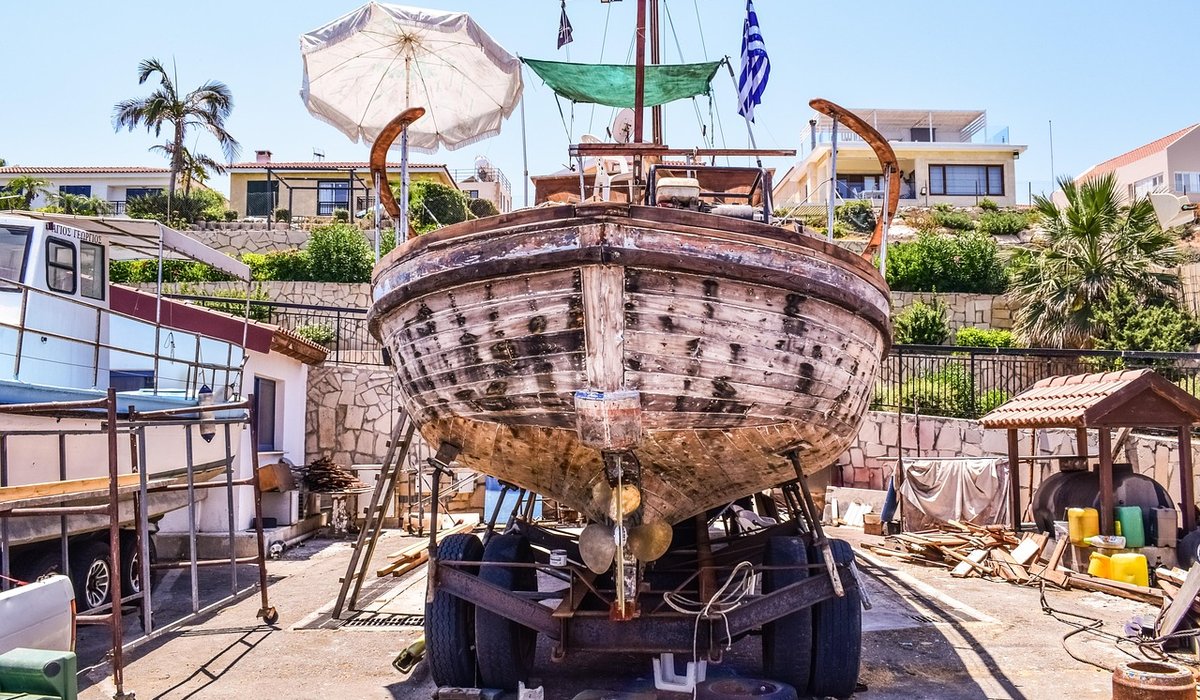
Painting and protecting a narrowboat hull
Buying a boat is the easy part. It is the years afterwards that catch people out. A narrowboat, cruiser or sailing yacht that costs you twenty, forty or eighty thousand pounds will quietly ask for several thousand pounds more every twelve months, whether you take it out once a week or leave it sitting under a tarpaulin. Knowing roughly what those bills look like before you sign anything is the difference between a relaxed life afloat and a slow, stressful drain on your savings.
The costs that arrive whether you cruise or not
Start with the bills that land regardless of how much you use the boat. These are predictable, and they should be the foundation of your budget:
- Mooring fees – paid monthly, quarterly or annually, and usually the largest single outgoing.
- Licence or registration – required for most inland waterways, priced by boat length.
- Insurance – third party at minimum, comprehensive if the boat is worth protecting.
- Boat safety certificate – renewed every four years on most inland waterways.
- Hull survey – typically every three to five years, and often demanded by insurers on older craft.
Add those together and you have your baseline. Everything else is variable, but nothing on that list goes away because you had a quiet month.
Moorings: usually the biggest line in the budget
What you pay depends enormously on where you are and what you want. A basic online mooring on a rural stretch can cost well under two thousand pounds a year. A serviced berth in a popular marina in the south of England can run to four, five, even six thousand pounds for a full-length boat, and that is before you factor in metered electricity.
Residential moorings, where they exist, carry a premium and long waiting lists. Many boaters who live aboard keep a cheaper leisure mooring and accept the restrictions that come with it. Some choose to continuously cruise instead, which removes the mooring fee but adds diesel, pump-out or Elsan disposal costs and constant logistical planning.
If you are weighing up a marina berth, ask what is actually included. Shore power, water, waste disposal, parking and winter hard standing are sometimes bundled and sometimes charged separately, and the difference can be hundreds of pounds a year.
Licensing, insurance and paperwork
Licence fees rise most years, so budget a little headroom. For a typical sixty-foot narrowboat you might be looking at somewhere between eight hundred and twelve hundred pounds annually, with shorter boats paying less. Discounts exist for prompt payment and for older boats in some cases, so it is always worth reading the current schedule carefully rather than estimating.
Insurance for a leisure boat commonly falls between two hundred and five hundred pounds a year, rising with value, age and whether you want to cover personal belongings or a liveaboard arrangement. Be honest with your insurer about how you use the boat. A policy that turns out to be void when you need it is worse than no policy at all. Safety certificates and surveys are small in isolation but should be saved for monthly so they do not arrive as a shock.
Maintenance: a rolling bill, not an annual one
This is where new owners get caught. Maintenance on a boat is not like servicing a car; it is a permanent, low-level programme of work, and it is always cheaper when planned.
- Hull blacking – every two to three years, roughly five hundred to a thousand pounds including slipping or docking.
- Anodes – replaced at the same time, a small cost that protects an expensive hull.
- Engine servicing – oil, filters, belts and impellers, once or twice a year.
- Batteries – a leisure bank rarely lasts more than four or five years.
- Stern gland, hoses, pumps and paintwork – small jobs that add up.
As a rough rule of thumb, many experienced owners set aside around ten per cent of the boat's value each year for maintenance and repairs. On a forty-thousand-pound boat, that is four thousand pounds a year. Some years you will spend far less; the year the hull needs welding, you will spend far more.
Fuel, heating and everyday running
Diesel is usually split between propulsion and domestic use, and the tax treatment differs, so keep your declarations accurate. A cruising narrowboat might burn five hundred to fifteen hundred pounds of diesel a year depending on how far it travels. Heating is a separate matter: solid fuel, coal or logs for a stove, or diesel for a central heating system, and cold winters can be surprisingly thirsty.
Then there are the small things. Gas bottles, pump-out cards, coal, laundry, replacement ropes and fenders, mooring pins, a new chimney. Individually trivial, collectively a few hundred pounds a year.
Building a repair fund before you need it
Set up a separate account and pay into it monthly, as you would a mortgage. A realistic target for a modest narrowboat is two hundred and fifty to four hundred pounds a month on top of your mooring and licence, which covers routine upkeep and slowly builds a cushion.
When something breaks, resist the urge to improvise. Get two quotes, ask other boaters who they trust, and prioritise anything that keeps water out or keeps you safe. Learn the simple jobs yourself — oil changes, filter swaps, touching up paint — because the labour saved pays for the parts. The boaters who enjoy this life most are rarely the ones with the biggest budgets; they are the ones who planned for the ordinary costs and were not surprised by them.
LEAVE A COMMENT